
Understanding Ductless HVAC Systems for Chicago Properties
Ductless HVAC installation represents one of the most efficient and flexible heating and cooling solutions available for Chicago homes and businesses today. These systems, also known as mini-split systems, offer remarkable versatility for properties throughout Lincoln Park, Glenview, Highland Park, and the broader Chicagoland area. Unlike traditional forced-air systems that rely on extensive ductwork to distribute conditioned air, ductless units deliver comfort directly to individual zones through sleek, wall-mounted air handlers connected to an outdoor condensing unit via refrigerant lines and electrical wiring.
The technology behind ductless systems has evolved significantly over recent decades, making them increasingly popular across Chicago’s diverse architectural landscape. These systems utilize inverter-driven compressors that adjust their speed continuously to maintain precise temperature control while consuming minimal energy. This advanced technology allows ductless systems to achieve efficiency ratings exceeding 30 SEER (Seasonal Energy Efficiency Ratio) in cooling mode and up to 13 HSPF (Heating Season Performance Factor) for heating applications. For Chicago residents facing both sweltering summers and frigid winters, this dual functionality provides year-round comfort without requiring separate heating and cooling equipment.
Installation Process and Technical Requirements
Installing ductless HVAC systems requires careful planning and technical expertise to ensure optimal performance and longevity. The process begins with a comprehensive load calculation to determine the appropriate system capacity for each space. This calculation considers factors including room dimensions, insulation levels, window placement, sun exposure, and typical occupancy patterns. Chicago’s extreme temperature variations, ranging from subzero winters to humid ninety-degree summers, demand precise sizing to maintain comfort while maximizing efficiency.
The physical installation involves mounting the indoor air handler units on interior walls or ceilings, typically positioned seven to eight feet above floor level for optimal air distribution. Each indoor unit connects to the outdoor condenser through a three-inch diameter hole drilled through the exterior wall, accommodating the refrigerant lines, condensate drain, and control wiring. The refrigerant lines must be properly insulated and protected from Chicago’s harsh weather conditions, while the condensate drainage system requires careful routing to prevent freezing during winter months. The outdoor unit placement requires adequate clearance for airflow and service access, often necessitating custom mounting brackets or platforms to elevate the unit above typical snow accumulation levels.
Advantages for Chicago Homes and Businesses
Ductless systems offer numerous benefits particularly suited to Chicago’s building stock and climate challenges. Many older homes in neighborhoods like Glencoe and Morton Grove lack existing ductwork, making traditional central air conditioning installations prohibitively expensive and disruptive. Ductless installations eliminate the need for extensive renovation work, preserving architectural details while providing modern comfort. The zone control capability allows occupants to heat or cool only occupied spaces, reducing energy waste in unused rooms and addressing the varying comfort preferences of different household members.
Energy efficiency stands as perhaps the most compelling advantage for Chicago property owners facing rising utility costs. Ductless systems eliminate the energy losses associated with ductwork, which can account for thirty percent or more of cooling energy consumption in traditional systems. The variable-speed technology adjusts output to match actual cooling or heating demands, avoiding the energy-intensive cycling common with conventional single-speed equipment. During Chicago’s shoulder seasons, when temperatures fluctuate dramatically between day and night, this modulating capability maintains consistent comfort while minimizing energy consumption.
System Components and Configuration Options
Modern ductless installations offer extensive configuration flexibility to accommodate diverse property layouts and comfort requirements. Single-zone systems pair one indoor unit with one outdoor condenser, ideal for supplementing existing heating and cooling in specific areas or conditioning additions and converted spaces. Multi-zone configurations connect multiple indoor units to a single outdoor condenser, with some systems supporting up to eight indoor units depending on total capacity requirements.
- Wall-mounted units: Most common configuration, offering efficient air distribution and minimal space requirements
- Ceiling cassette units: Recessed installation provides discrete appearance while delivering four-way airflow patterns
- Floor-mounted consoles: Ideal for rooms with limited wall space or where low-temperature heating is prioritized
- Ducted mini-split units: Concealed units that serve multiple rooms through short duct runs
Maintenance Requirements and Long-term Performance
Proper maintenance ensures ductless systems deliver reliable performance throughout Chicago’s demanding weather conditions. Regular filter cleaning or replacement, typically monthly during peak usage periods, maintains optimal airflow and indoor air quality. The absence of ductwork eliminates concerns about duct cleaning and sealing, though the outdoor unit requires periodic inspection to remove debris and ensure adequate airflow. Professional maintenance should include refrigerant level verification, electrical connection inspection, and condensate drainage system cleaning to prevent clogs and potential water damage.
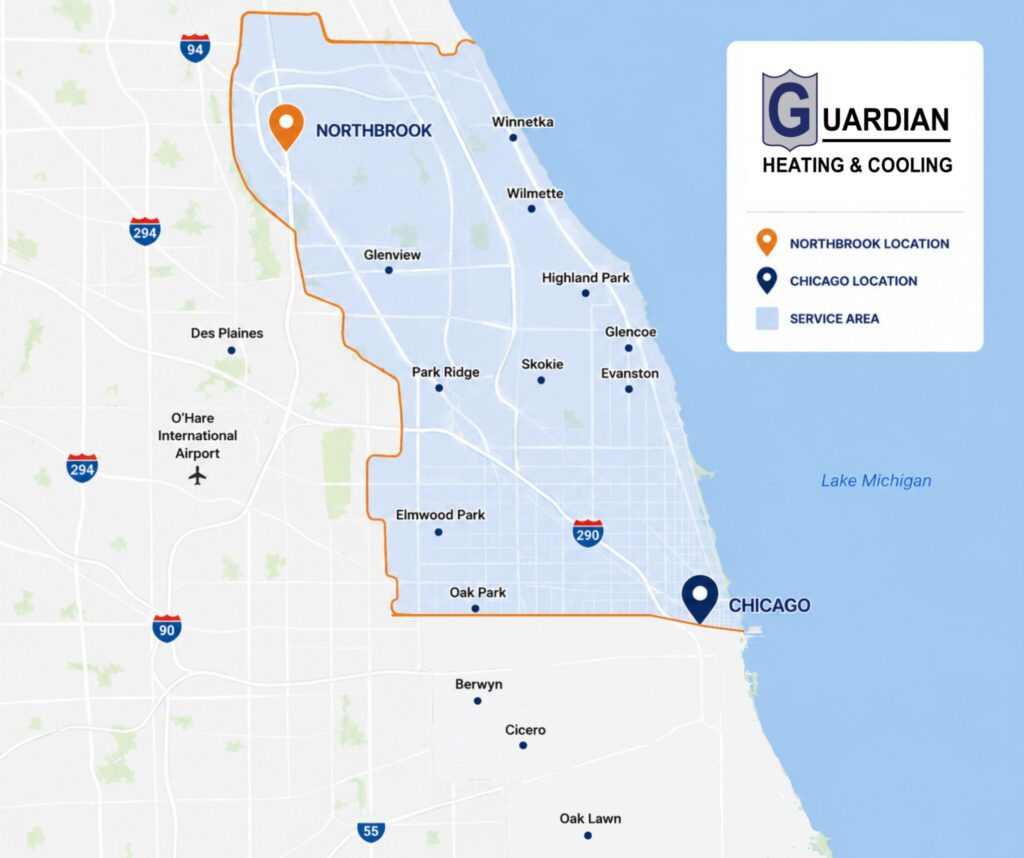
Guardian Heating & Cooling has been proudly serving up comfort all across Chicagoland since 1953, bringing extensive experience in maintaining these sophisticated systems. Our family oriented business is large enough to service all makes and models of equipment, yet small enough to care about each individual installation. Regular professional maintenance extends equipment lifespan beyond the typical twelve to fifteen years while maintaining peak efficiency ratings. The relatively simple mechanical design of ductless systems, with fewer moving parts than traditional central systems, contributes to their reliability and reduced maintenance requirements.
Cost Considerations and Return on Investment
While initial installation costs for ductless systems may exceed window units or portable air conditioners, the long-term value proposition proves compelling for Chicago property owners. Utility rebates and federal tax credits often offset upfront expenses, while monthly energy savings accumulate rapidly. The ability to control temperatures in individual zones prevents waste from conditioning unoccupied spaces, particularly valuable for households with varying schedules or commercial properties with fluctuating occupancy patterns.
Installation complexity varies based on property characteristics and system configuration, influencing project timelines and costs. Single-zone installations typically complete within one day, while multi-zone systems may require two to three days depending on indoor unit locations and routing requirements. The minimal structural modifications required preserve property value while adding desirable climate control capabilities that appeal to future buyers or tenants, particularly important in Chicago’s competitive real estate market where modern amenities command premium prices.